.png)

.png)
.png)

สมมติ Survey มีคำตอบปลายเปิด 5,000 ข้อความ
ถ้านักวิจัยอ่านและ Coding ทุกข้อความด้วยมือ งานอาจใช้เวลามาก AI จึงดูเหมาะมากสำหรับการช่วย Categorize และ Summarize
แต่ปัญหาเกิดขึ้นทันทีถ้าเราเปลี่ยนจาก: “ให้ AI ช่วย Coding”
เป็น: “ให้ AI วิเคราะห์แทนทั้งหมด”
เพราะ Qualitative Coding ไม่ได้เป็นเพียงการจับ Keyword แล้วใส่ Category การเลือกว่าจะ Code ข้อความอย่างไรขึ้นอยู่กับ Research Question, Context และมุมมองเชิงวิเคราะห์ของผู้วิจัย Braun และ Clarke อธิบายว่าใน Reflexive Thematic Analysis การ Coding เป็นกระบวนการที่มีลักษณะ Subjective, Situated และ Interpretive ไม่ได้มี Code ที่ “ถูกต้องเพียงหนึ่งเดียว” แยกออกจากนักวิจัยและบริบทของงาน.
ดังนั้น AI ควรเป็นผู้ช่วยที่ทำให้การวิเคราะห์เร็วขึ้นและตรวจสอบง่ายขึ้น ไม่ใช่ผู้ตัดสินว่าข้อมูล “หมายความว่าอะไร” โดยอัตโนมัติ
ให้ AI ช่วย “จัดและหา” แต่ให้นักวิจัยเป็นคน “ตีความและตัดสิน”
Generative AI สามารถช่วยประมวลผลข้อความจำนวนมาก เสนอ Code, จัดกลุ่ม Response และค้นหา Pattern ได้เร็วขึ้น
งานเปรียบเทียบในปี 2026 พบว่า AI tools หลายระบบสามารถจับประเด็นที่เกี่ยวข้องและประหยัดเวลาได้ แต่ยังไม่สามารถสร้าง Interpretive Depth ได้เท่าการวิเคราะห์โดยมนุษย์ในชุดข้อมูลที่ศึกษา.
สิ่งสำคัญจึงไม่ใช่คำถามว่า “AI Coding ได้หรือไม่?” แต่คือ “ส่วนใดควรให้ AI ช่วย และส่วนใดนักวิจัยต้องถือ Analytical Authority ไว้เอง?”
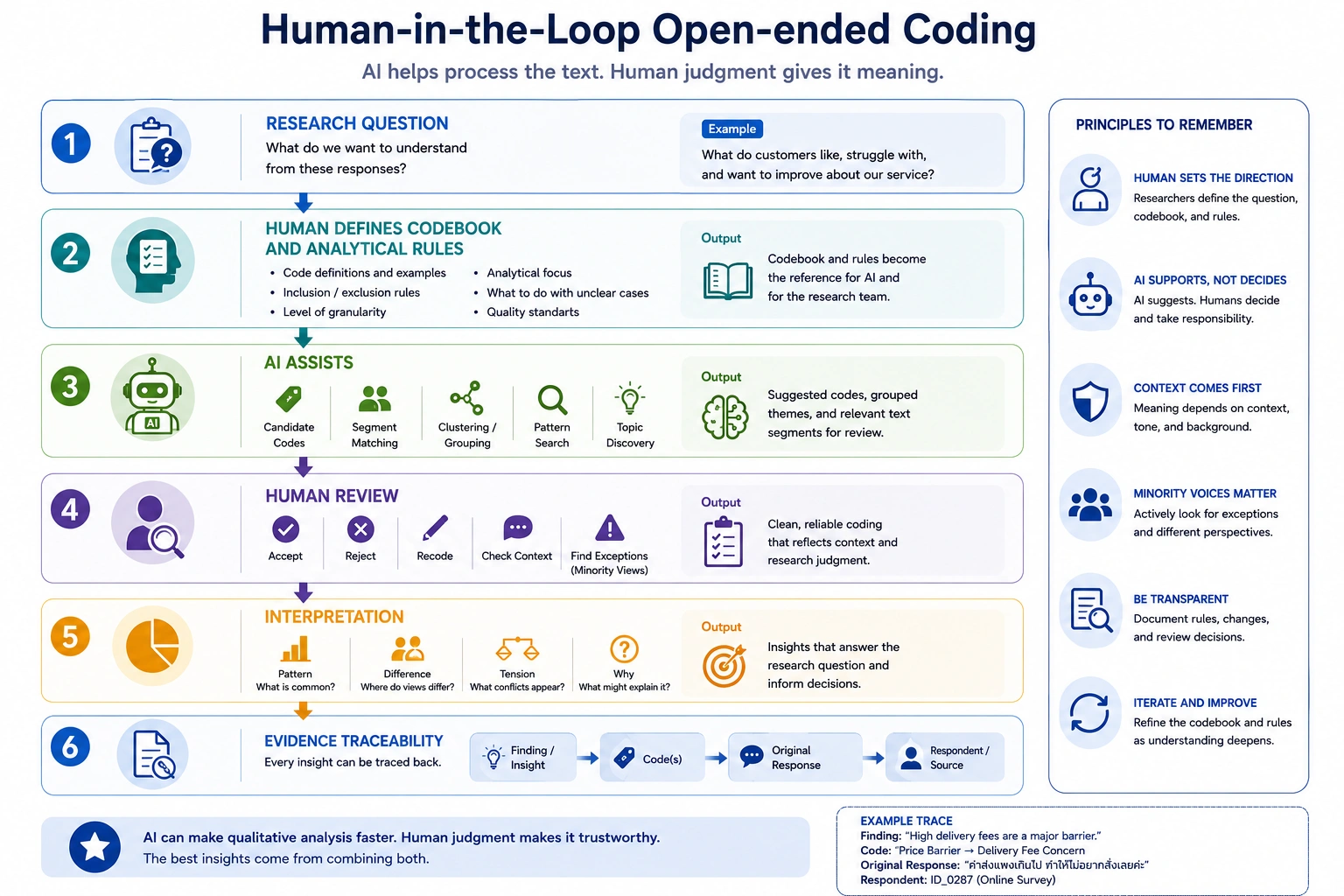
กรอบที่ใช้ได้คือ: Human Framing → AI Assistance → Human Review → Context Check → Interpretation → Evidence Traceability
Open-ended Coding ไม่ใช่แค่การติด Label ให้ข้อความ
คำตอบ: “สินค้าใช้ดีนะ แต่ถ้าราคานี้คงไม่ได้ซื้อบ่อย”
สามารถถูก Code ได้หลายมิติ เช่น:
- Product Satisfaction
- Price Barrier
- Low Repeat Purchase Potential
- Value Concern
ถ้าถามเรื่อง Product Experience จุดสำคัญอาจอยู่ที่ “ใช้ดี”
ถ้าถามเรื่อง Pricing จุดสำคัญอาจอยู่ที่ “ราคานี้”
ถ้าถามเรื่อง Retention ประโยค “ไม่ได้ซื้อบ่อย” อาจสำคัญที่สุด
Code จึงไม่ได้เกิดจากข้อความเพียงอย่างเดียว แต่เกิดจาก: Data + Research Question + Analytical Lens
งาน Reflexive Thematic Analysis เน้นว่าการ Coding และ Theme Development เป็นกระบวนการตีความ และคุณภาพของการวิเคราะห์ขึ้นอยู่กับการมีส่วนร่วมเชิงลึกของนักวิจัยกับ Dataset ไม่ใช่เพียงการดำเนินตามขั้นตอนแบบอัตโนมัติ.
นี่คือเหตุผลที่ AI สามารถช่วยเสนอ Code ได้ แต่ไม่ควรเป็นผู้กำหนด Analytical Meaning เพียงลำพัง
งานแบบไหนที่ AI ช่วยได้ดี?
AI มีประโยชน์มากเมื่อโจทย์ชัดและงานมีลักษณะซ้ำ เช่น:
- เสนอ Candidate Codes จากตัวอย่างข้อความ
- ค้นหา Text Segments ที่อาจเข้า Code ที่กำหนดไว้แล้ว
- เสนอ Subcodes เพื่อให้นักวิจัยพิจารณา
- จัดกลุ่มข้อความที่มีเนื้อหาใกล้กัน
- ช่วยตรวจว่ามี Topic ใดที่ Codebook อาจยังไม่ครอบคลุม
- สรุปข้อความภายใน Code เพื่อช่วยเริ่มต้นการ Review
- ช่วยค้นหา Negative Cases หรือข้อความที่แตกต่างจาก Pattern หลัก
เครื่องมือ Qualitative Analysis อย่าง MAXQDA ใช้แนวคิดนี้โดยให้ AI เสนอ Coding ที่ตรงกับ Code Description พร้อมเหตุผลประกอบ และยังเปิดให้นักวิจัย Review, Accept, Reject หรือปรับแก้ผลลัพธ์ได้. จุดสำคัญคือ AI Output ควรถูกอ่านเป็น: Candidate Analysis ไม่ใช่ Final Finding
ถ้า Codebook มีอยู่แล้ว AI มักช่วยได้ง่ายกว่าการให้สร้าง Interpretation ตั้งแต่ศูนย์
ลองเปรียบเทียบสอง Prompt
แบบที่ 1: “วิเคราะห์คำตอบทั้งหมดและบอกว่าลูกค้าคิดอะไร”
กับ: แบบที่ 2: “ใช้ Code Definition ต่อไปนี้เพื่อหา Response ที่พูดถึง Price Barrier โดยรวมกรณีที่ลูกค้าระบุว่าราคาแพงเกิน Value ที่ได้รับ และไม่รวมข้อความที่กล่าวถึงราคาเพียงเพื่อเปรียบเทียบกับคู่แข่ง”
Prompt แบบที่สองมี Analytical Constraint ชัดกว่า
งานวิจัยเกี่ยวกับ LLM-assisted Qualitative Coding ในปี 2025 เสนอ Hybrid Workflow ที่ให้นักวิจัยพัฒนา Codebook ก่อน แล้วจึงใช้ LLM ช่วยนำ Codebook ไปประยุกต์กับข้อมูล พร้อมตรวจ Machine Output เทียบกับ Human-derived Benchmark.
สำหรับ Code ที่ต้องการ Consistency ควรกำหนดอย่างน้อย:
- Code Name
- Definition
- Inclusion Criteria
- Exclusion Criteria
- Example
- Boundary กับ Code ที่ใกล้กัน
Definition ที่ชัดไม่ได้ทำให้ AI “เข้าใจเหมือนมนุษย์” แต่ช่วยลดพื้นที่ที่ระบบต้องเดา
สิ่งที่ AI พลาดง่ายคือ Context, Ambiguity และความหมายที่ไม่ได้พูดตรง ๆ
ลองดูข้อความ: “ก็ดีนะ ถ้าคุณมีเวลารอครึ่งชั่วโมงทุกครั้ง”
การอ่านตามคำอาจเห็น Positive Expression: “ก็ดี”
แต่ Meaning ใน Context อาจเป็นการประชดและสะท้อน Negative Service Experience
ความยากเพิ่มขึ้นเมื่อข้อมูลมี:
Sarcasm
Cultural Reference
Dialect
Mixed Emotion
Implicit Meaning
Contradiction
Power Relationship
ข้อมูลที่ต้องอาศัย Context จากประโยคก่อนหน้า
งานปี 2026 ที่ศึกษาการใช้ ChatGPT ช่วย Thematic Coding กับข้อมูลสัมภาษณ์ Roman Urdu พบว่า AI จัดการ Surface Content ได้ค่อนข้างดี แต่มีแนวโน้ม Flatten Cultural และ Emotional Nuance และยังต้องใช้ Human-in-the-loop เพื่อรักษา Interpretive Depth.
งานเปรียบเทียบ AI tools กับ Human Thematic Analysis อีกชิ้นในปี 2026 ก็พบเพียง Partial Convergence และไม่มีเครื่องมือใดในชุดที่ศึกษาสามารถสร้างความลึกของ Interpretation ได้เท่าการวิเคราะห์โดยมนุษย์.
ดังนั้น: Text Classification ≠ Full Qualitative Interpretation
อย่าให้ AI ทำให้ Minority View หายไปจาก Analysis
AI มีแนวโน้มทำงานได้สะดวกกับสิ่งที่เกิดซ้ำ เพราะ Pattern ที่พบหลายครั้งมองเห็นง่าย
แต่ Qualitative Insight ที่สำคัญไม่จำเป็นต้องเป็น Theme ที่พบมากที่สุดเสมอ
คำตอบเพียงไม่กี่ข้อความอาจเปิดเผย:
Critical Safety Issue
New Use Case
Emerging Need
Unexpected Barrier
ความแตกต่างของ Customer Segment สำคัญ
สมมติ 90% บอกว่า Onboarding ใช้ง่าย แต่มีลูกค้า 5 คนที่ใช้ Screen Reader แล้วไม่สามารถผ่านขั้นตอนหนึ่งได้
การสรุปว่า:“Onboarding ไม่มีปัญหา” ย่อมทำให้ข้อมูลสำคัญหายไป
BEE Interpretation ที่ควรใช้คือ: Frequency ≠ Importance
นักวิจัยจึงควรให้ AI ช่วยหา Main Pattern ควบคู่กับการถาม:
- มีข้อความใดไม่เข้ากับ Pattern นี้?
- มี Negative Case หรือไม่?
- มี Segment ไหนพูดต่างออกไป?
- มี Issue ที่ Frequency ต่ำแต่ Severity สูงหรือไม่?
คุณค่าของ Qualitative Analysis ไม่ได้อยู่ที่การบอกว่าอะไรถูกพูดบ่อยที่สุดอย่างเดียว แต่อยู่ที่การอธิบาย Pattern, Difference, Tension และ Context ด้วย
Human Review ต้องย้อนกลับไปถึง Original Response ไม่ใช่ Review แค่ Summary ของ AI
Workflow ที่เสี่ยงคือ: Raw Data → AI Summary → Researcher อ่าน Summary → Finding
นักวิจัยใน Workflow นี้อาจไม่ได้เห็นข้อมูลต้นฉบับเพียงพอ
Workflow ที่แข็งแรงกว่าคือ: Raw Data → AI-assisted Coding → Original Extracts → Human Review → Interpretation
MAXQDA ออกแบบ AI-assisted functions ให้สามารถย้อนกลับไปยัง Source Passages และแสดงเหตุผลของ Suggested Coding เพื่อช่วยให้ผู้ใช้ Review และ Validate ผลลัพธ์กับข้อมูลต้นฉบับ.
หลักที่ควรรักษาคือ:
Finding ต้อง Trace กลับไปได้ถึง Code
Code ต้อง Trace กลับไปได้ถึง Original Response
และนักวิจัยควรสามารถอธิบายได้ว่า:
ทำไมข้อความนี้จึงถูก Code แบบนี้?
AI Coding ต้องมี Privacy และ Data Governance ก่อนมี Prompt ที่ดี
ก่อน Upload Interview Transcript, Open-ended Response หรือ Client Data เข้า AI Tool ควรถามก่อนว่า:
ข้อมูลมี Personal Data หรือ Confidential Information หรือไม่?
Respondent ได้รับการแจ้งเรื่องการประมวลผลข้อมูลไว้อย่างไร?
Client อนุญาตให้ใช้ AI กับข้อมูลนี้หรือไม่?
ข้อมูลถูกส่งไปเก็บหรือประมวลผลที่ไหน?
Provider ใช้ข้อมูลเพื่อ Training หรือไม่?
ใครสามารถเข้าถึง Input และ Output?
ICC/ESOMAR International Code ฉบับปัจจุบันกำหนดให้ลูกค้าได้รับข้อมูลเมื่อมีการใช้ AI ในการวิเคราะห์หรือ Interpretation รวมถึงต้องระบุระดับ Human Oversight และกำหนดให้ Research Data ที่ใช้กับ AI อยู่ในสภาพแวดล้อมที่ปลอดภัยและควบคุมได้.
ESOMAR ยังแนะนำให้ตรวจ Data Ownership, สิทธิในการนำข้อมูลเข้า AI System และข้อจำกัดจาก Client หรือ Data Owner ก่อนใช้ AI-based Research Services.
ดังนั้น: Can AI process it? ≠ Are we allowed to upload it?
Workflow ที่เหมาะกับ AI-assisted Open-ended Coding
- Define the Research Question
ต้องรู้ก่อนว่า Coding นี้กำลังช่วยตอบอะไร - Read a Human Sample First
ให้นักวิจัยอ่านข้อมูลส่วนหนึ่งเพื่อเข้าใจ Language, Context และความหลากหลายของ Response ก่อน Automation - Draft the Codebook
กำหนด Code, Definition, Inclusion, Exclusion และตัวอย่าง - Pilot AI Coding
ทดลองกับ Sample ขนาดเล็กก่อนใช้กับ Dataset ทั้งหมด - Compare with Human Judgment
ดูทั้ง Agreement และ Disagreement และวิเคราะห์ว่าทำไมจึงต่าง - Refine the Rules
แก้ Code Definition หรือ Prompt เมื่อ Boundary ไม่ชัด - Scale with Review
ให้ AI ช่วย Dataset ขนาดใหญ่ แต่ยังมี Human Review โดยเฉพาะ Ambiguous Cases และ Critical Codes - Search for Exceptions
ตรวจ Minority Views, Negative Cases และข้อมูลที่ไม่เข้ากับ Pattern หลัก - Interpret as a Researcher
เชื่อม Observation → Pattern → Tension → Why → Business Implication - Document AI Use
บันทึก Tool, Model หรือ Version เมื่อเกี่ยวข้อง, Prompt / Rule, Date, Human Review และ Limitation เพื่อสร้าง Audit Trail
แนวทาง MAXQDA สำหรับ AI Coding ก็แนะนำให้ Pilot กับข้อมูลขนาดเล็กก่อน Scale รวมถึงบันทึก Software Version และเวลาที่ทำ Analysis เพื่อรักษา Transparency และ Audit Trail.
สรุป: AI ควรทำให้ Researcher ใช้เวลากับ Judgment มากขึ้น ไม่ใช่ทำให้ Judgment หายไป
คำถามที่เหมาะสมไม่ใช่: “AI สามารถ Coding แทนนักวิจัยได้ไหม?”
แต่คือ: “งานส่วนไหนควร Automate เพื่อให้นักวิจัยมีเวลามากขึ้นกับส่วนที่ต้องใช้ Judgment?”
Evidence ปัจจุบันให้ภาพที่ค่อนข้างสอดคล้องกันว่า AI สามารถช่วยจับประเด็น จัดหมวดหมู่ และลดเวลาบางส่วนของ Qualitative Analysis ได้ แต่ Human Interpretation ยังมีบทบาทสำคัญ โดยเฉพาะเมื่อต้องอ่าน Context, Cultural Nuance, Emotion และความหมายเชิงลึก.
สำหรับ BEE หลักที่ควรรักษาคือ:
AI can support Coding
AI Output is not Evidence by itself
Human must verify Context, Validity, Nuance and Interpretation
Workflow ที่เหมาะจึงเป็น: Human Framing → AI Assistance → Human Review → Interpretation → Evidence Traceability
ถ้า AI ทำให้ Researcher อ่านข้อมูลน้อยลงเรื่อย ๆ จนเหลือเพียงการรับ Summary จาก Model เราอาจได้ Productivity มากขึ้น แต่สูญเสียส่วนที่สำคัญที่สุดของ Qualitative Research ไป
ในทางกลับกัน ถ้า AI ช่วยลดเวลาในการจัดข้อมูล ค้นหา Text Segments และงาน Coding ที่ซ้ำ เพื่อให้นักวิจัยใช้เวลากับ Context, Exceptions และ Interpretation มากขึ้น AI ก็สามารถเพิ่มประสิทธิภาพโดยไม่ต้องแทน Judgment ของนักวิจัย

AI เหมาะกับการช่วยจัดระเบียบ Open-ended Responses, เสนอ Candidate Codes, ค้นหาข้อความที่อาจเข้ากับ Code ที่กำหนด และช่วยตรวจ Pattern เบื้องต้น แต่ไม่ควรได้รับอำนาจตัดสินความหมายสุดท้ายของข้อมูล นักวิจัยยังต้องรับผิดชอบ Research Question, Code Definition, Context, Ambiguity, Exceptions, Interpretation และการตรวจกลับไปยัง Original Response ทุกครั้ง หลักสำคัญคือ AI ช่วยลดงานซ้ำ ไม่ใช่ลดการคิดของนักวิจัย
Sources
- Braun and Clarke, Thematic Analysis resources. Describe Reflexive Thematic Analysis as an interpretive, subjective and situated process in which researcher engagement is integral to Coding and Theme Development.
- Ayik et al., Human vs. AI: Evaluating Thematic Analysis With ChatGPT, QInsights, ATLAS.ti AI, and MAXQDA AI Assist, Qualitative Inquiry, 2026. Found partial convergence and time savings from AI tools, while none fully replicated the interpretive depth of the human reference analysis.
- Dunivin, Scaling Hermeneutics: A Guide to Qualitative Coding with LLMs for Reflexive Content Analysis, EPJ Data Science, 2025. Proposes a Hybrid Workflow in which researchers first develop the Codebook before LLM-assisted Coding and then compare machine output with human-derived benchmarks.
- Using ChatGPT for Thematic Analysis of Qualitative Interviews in Cultural Research, 2026. Reports strength in coding surface content alongside limitations in Cultural and Emotional Nuance and emphasizes Human-in-the-loop oversight.
- MAXQDA AI Assist. Provides AI-assisted Coding with coding suggestions, source-linked review and explanations, and recommends pilot testing and maintaining an analytical Audit Trail.
- ICC/ESOMAR International Code. Requires transparency about AI use and Human Oversight and protection of Research Data within secure and controlled environments.

.png)
.png)
.png)